
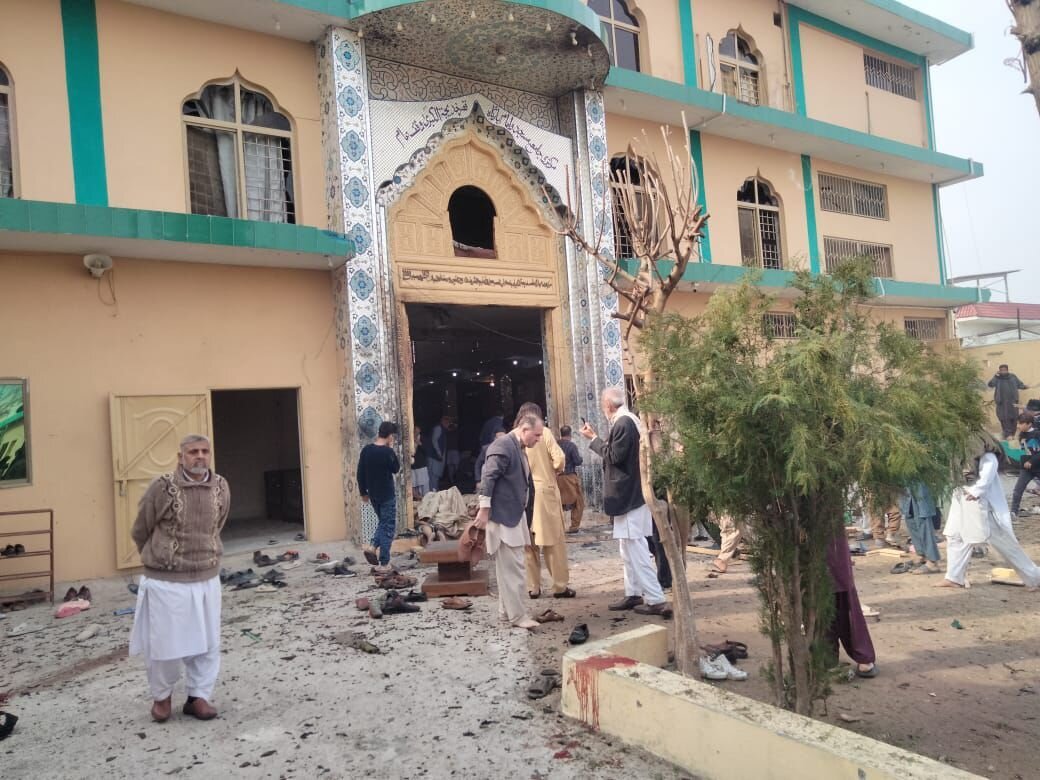
Hawzah News Agency- On 6 February 2026, a suicide bombing at the Shia mosque Khadija Tul Kubra in Pakistan’s capital, Islamabad, killed at least 31 worshippers and wounded more than 169 others. The attack has once more laid bare the deep structural failures of Pakistan’s security and governance apparatus, exposing not only incompetence but a chronic inability—or unwillingness—to protect a vulnerable religious minority.
The killing of Shias in Pakistan is neither spontaneous nor incidental. It is part of a long, uninterrupted continuum of sectarian violence that the state has repeatedly failed to prevent, disrupt, or prosecute in any meaningful way. While attacks intensify during the holy month of Muharram and the extended mourning period that continues until the 8th of Rabi‘ al-Awwal, the violence is not confined to specific dates. It is systematic, predictable, and patterned.
Shias constitute approximately 15 percent of Pakistan’s population. Despite constitutional guarantees of religious freedom, they are routinely attacked in imambargahs, mosques, Muharram processions, and public gatherings central to their faith. Religious observance has effectively been transformed into a death sentence. On Ashura, during juloos and taziya processions, Shia communities are not safeguarded by the state; instead, they are rendered soft targets through cosmetic and ineffective security measures.
Each year, authorities announce “zero tolerance” policies. Each year, these declarations collapse under the weight of repetition and inaction. The question is no longer whether the state is aware of the threat, but why the same failures are knowingly reproduced year after year, with lethal consequences.
Human Rights Watch and independent rights groups have for decades documented the targeted nature of anti-Shia violence and the government’s consistent failure to dismantle sectarian militant networks. Groups such as Lashkar-e-Jhangvi, Tehrik-i-Taliban Pakistan (TTP), and affiliated outfits have openly incited hatred and violence against Shias. Despite periodic bans and military operations, their ideological infrastructure, recruitment pipelines, and local facilitators remain intact, operating with near impunity across successive governments.
The historical record further indicts the state. From the Therhi massacre of 1963, to the Gilgit massacre of 1988, to the repeated mass killings of Hazara Shias in Quetta, and ambushes on Shia convoys in Kurram and Kohistan, the evidence points not to isolated incidents but to entrenched structural failure. Decades of bloodshed have produced inquiries, commissions, and official statements—yet no sustained, enforceable national strategy has emerged to dismantle the machinery of sectarian violence.
The state’s response has been performative rather than strategic, reactive rather than preventative. Victims are overwhelmingly Shia; perpetrators are well-known anti-Shia militant movements; yet political will remains conspicuously absent. Shia neighborhoods are besieged, pilgrim routes have become killing grounds, and religious spaces are transformed into mass graves.
Pakistan’s inability to protect its Shia population is not merely a security failure—it is a profound governance crisis. Until the state demonstrates genuine resolve to confront sectarian militancy, dismantle its ideological networks, and hold perpetrators accountable, the cycle of violence will continue. Silence, denial, and symbolism will only ensure that the next attack is not a question of if, but when.
Azmat Ali


Your Comment