
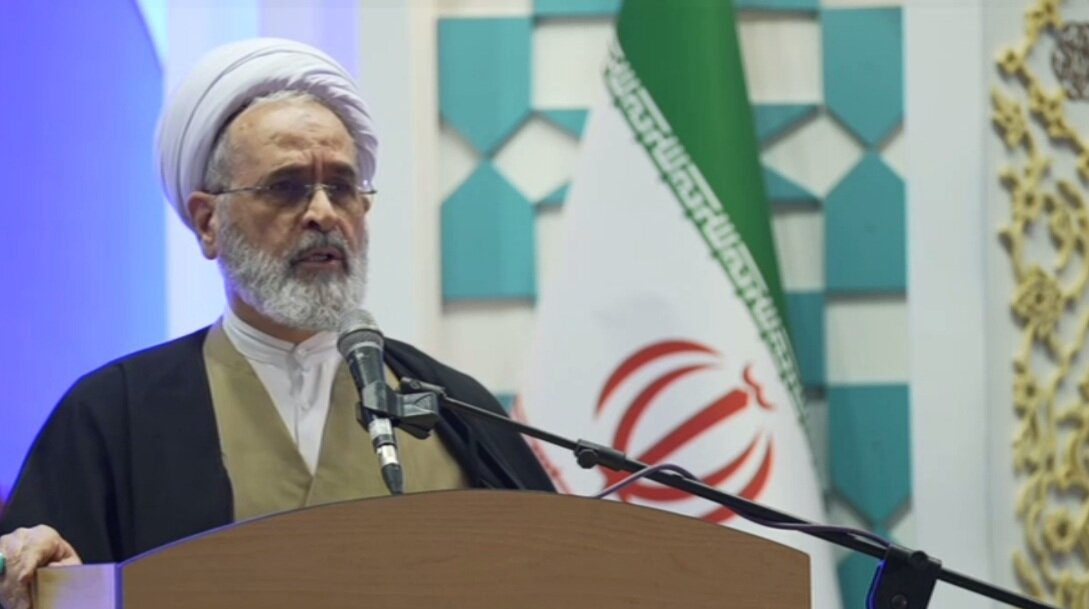
Hawzah News Agency- Speaking on Thursday at a congress marking the 50th anniversary of the passing of Grand Ayatollah Milani, held at the Quds Hall of the Astan Quds Razavi Library in Mashhad, the director of Iran’s seminaries highlighted the late cleric’s enduring scientific, social, and political legacy, describing him as a landmark figure in contemporary Shiite history.
Ayatollah Arafi stressed the central role of religious scholars in shaping the Islamic movement, saying today’s Islamic awakening is rooted in the divine uprising initiated by Imam Khomeini and continued under the guidance of the Leader of the Islamic Revolution. He said honoring figures such as Ayatollah Milani is essential to preserving the scholarly, spiritual, and historical identity of the seminaries.
Mashhad Seminary’s Enduring Role
Highlighting the historical importance of the Khorasan seminary, Ayatollah Arafi said the institution has long been one of Iran’s most influential centers of Islamic learning. He noted that under the leadership of Grand Ayatollah Milani, the Mashhad seminary reached a peak that extended its influence to other seminaries across the country.
“This is the seminary from which the Leader of the Islamic Revolution emerged,” he said, adding that its mission must continue with greater depth, clarity, and continuity.
Six Dimensions of a Lasting Legacy
Ayatollah Arafi outlined six defining dimensions of Ayatollah Milani’s personality, each requiring independent and in-depth study.
The first was his scientific and jurisprudential stature. Ayatollah Milani, he said, possessed comprehensive jurisprudential insight in Islamic principles, training generations of distinguished scholars and producing influential works in jurisprudence, theology, Qur’anic exegesis, and hadith.
The second dimension was his moral and spiritual conduct. Ayatollah Arafi said sincerity, humility, asceticism, and avoidance of fame defined Ayatollah Milani’s life, adding that many of his contributions were carried out quietly and solely for the sake of God.
The third dimension was his close bond with society. From Najaf and Karbala to Mashhad, Ayatollah Milani maintained direct engagement with the public while remaining deeply connected to scholarly and intellectual circles.
The fourth was his leadership and reformist role within the seminary. Ayatollah Arafi said Ayatollah Milani pursued a balanced approach—preserving foundational traditions while opening new educational and research horizons—without falling into stagnation or uncritical modernism.
The fifth dimension was his international outlook and commitment to Islamic unity. His scholarly interactions extended beyond Iran, grounded in dialogue, rational engagement, and firm opposition to Zionism.
The sixth and final dimension was his political and revolutionary insight. Ayatollah Arafi said Ayatollah Milani held a distinguished position among Shiite authorities in recognizing and supporting Imam Khomeini’s movement at a critical historical moment.
“The Islamic Revolution transformed passivity into action,” he said. “Ayatollah Milani was among those who clearly understood this message and stood firmly behind it.”
Ayatollah Arafi concluded by expressing hope that the Mashhad seminary and other religious centers would continue to draw inspiration from Ayatollah Milani’s scholarly depth and revolutionary vision, enabling younger clerics to advance the ideals of the Islamic Revolution and honor the legacy of its martyrs.


Your Comment