
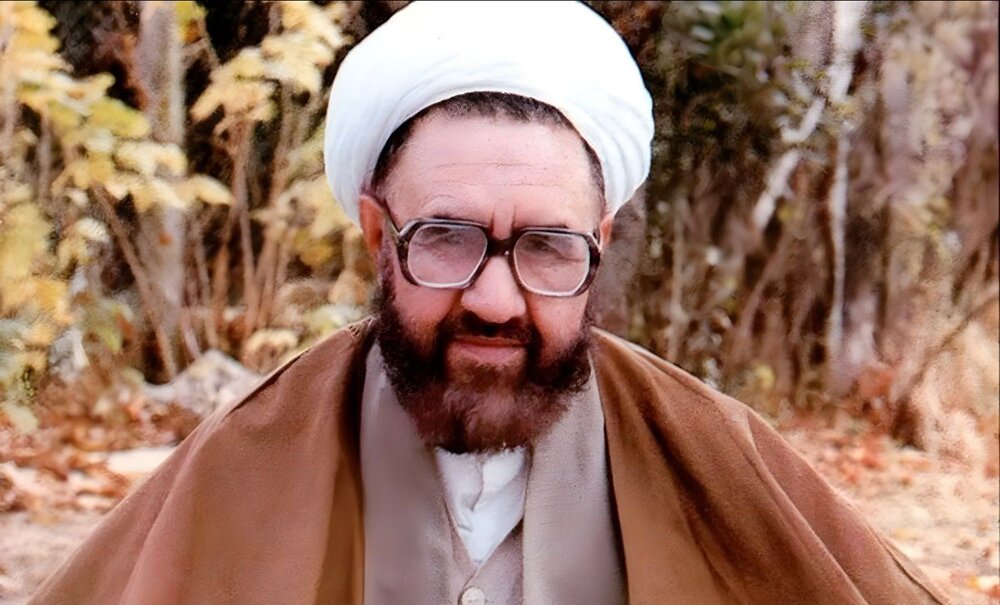
Hawzah News Agency- According to Professor Shahid Morteza Motahari, Islamic unity should be understood as “good understanding while preserving Shia identity.” He stressed that Shia Muslims, while firmly adhering to their principles, jurisprudence, and traditions, should engage in dialogue and understanding with other Muslims so that the teachings of the Ahl al-Bayt (AS) can be more widely introduced.
Professor Motahari clarified that no aspect of Shia belief – even in minor issues such as mustahabb and makruh – is subject to compromise. Unity does not mean abandoning distinctive doctrines, nor does it mean expecting others to renounce theirs. Instead, it creates an atmosphere where Shia teachings can be presented as an authentic and rich part of Islamic heritage, ensuring they are not marginalized.
Highlighting the difference between “party unity” and “front unity,” Professor Motahari explained that party unity requires absolute agreement in doctrine and method, which is neither practical nor intended. By contrast, front unity means that different sects, despite theological and jurisprudential differences, align together in the face of external threats.
This vision was also pursued by prominent figures such as the late Grand Ayatollah Boroujerdi in the Shia world and Allama Sheikh Abdul Majid Salim and Allama Sheikh Mahmoud Shaltoot among Sunni scholars. None of these leaders aimed for religious unification, but rather for an atmosphere of mutual respect that would allow Islamic sects to cooperate while preserving their distinct identities.
Grand Ayatollah Boroujerdi, in particular, believed that the dissemination of the teachings of the Ahl al-Bayt among Sunni scholars was only possible through goodwill and understanding. For him, the essence of Islamic unity was not doctrinal uniformity, but the creation of a common platform to counter the enemies of Islam and strengthen the Islamic ummah.
Source: Professor Morteza Motahari, Imamate and Leadership, p. 17


Your Comment